
Twenty-Five Years Ahead of Us
TMCC’s JIVE program joined Hudson Link and four other prison-education programs from across the
country in New York this summer to strengthen the bridge between college in prison and life after
release.
By Jarret Orcutt · Coordinator of Educational Partnership Programs, Truckee Meadows Community College
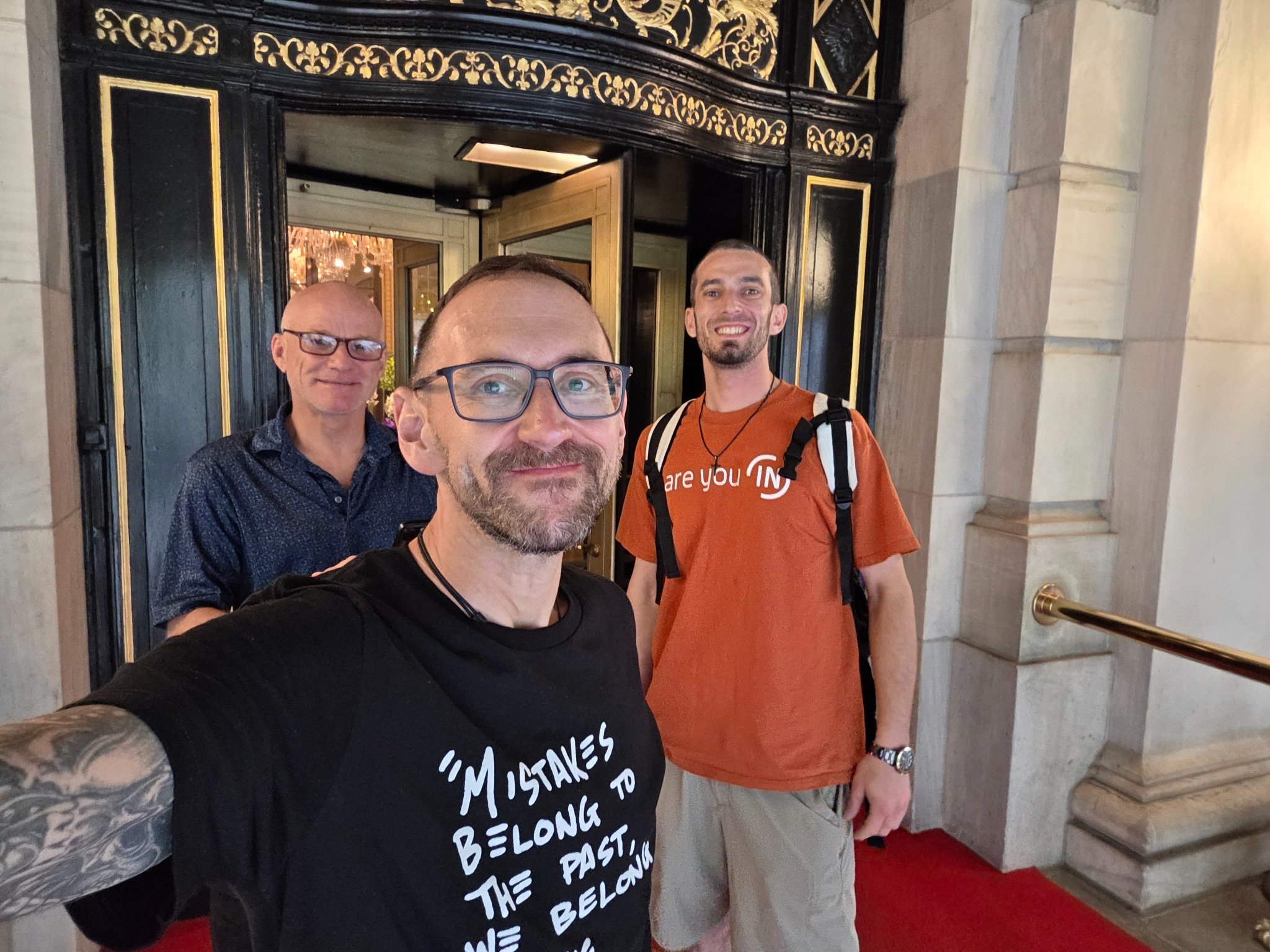
The Nevada JIVE team in New York City, July 2026. Left to right: Lary Plumlee, Jarret Orcutt and Samuel Gutierrez.
In July, two JIVE mentors and I traveled from Nevada to Ossining, New York, for a national reentry summit hosted by Hudson Link for Higher Education in Prison.
TMCC’s Justice Involved Education program was one of five programs selected for Hudson Link’s Reentry Capacity Building initiative, joining teams connected to Yale, Tufts University, Goucher College and the Texas Education Justice Alliance-South at the University of Texas at San Antonio. The initiative pairs technical assistance with funding to strengthen what happens when education that began during incarceration continues on the outside.
I brought Samuel Gutierrez and Lary Plumlee because both are JIVE mentors, and I wanted the people doing the work closest to our students sitting at the same table as the people designing it.
Five Programs, One Table
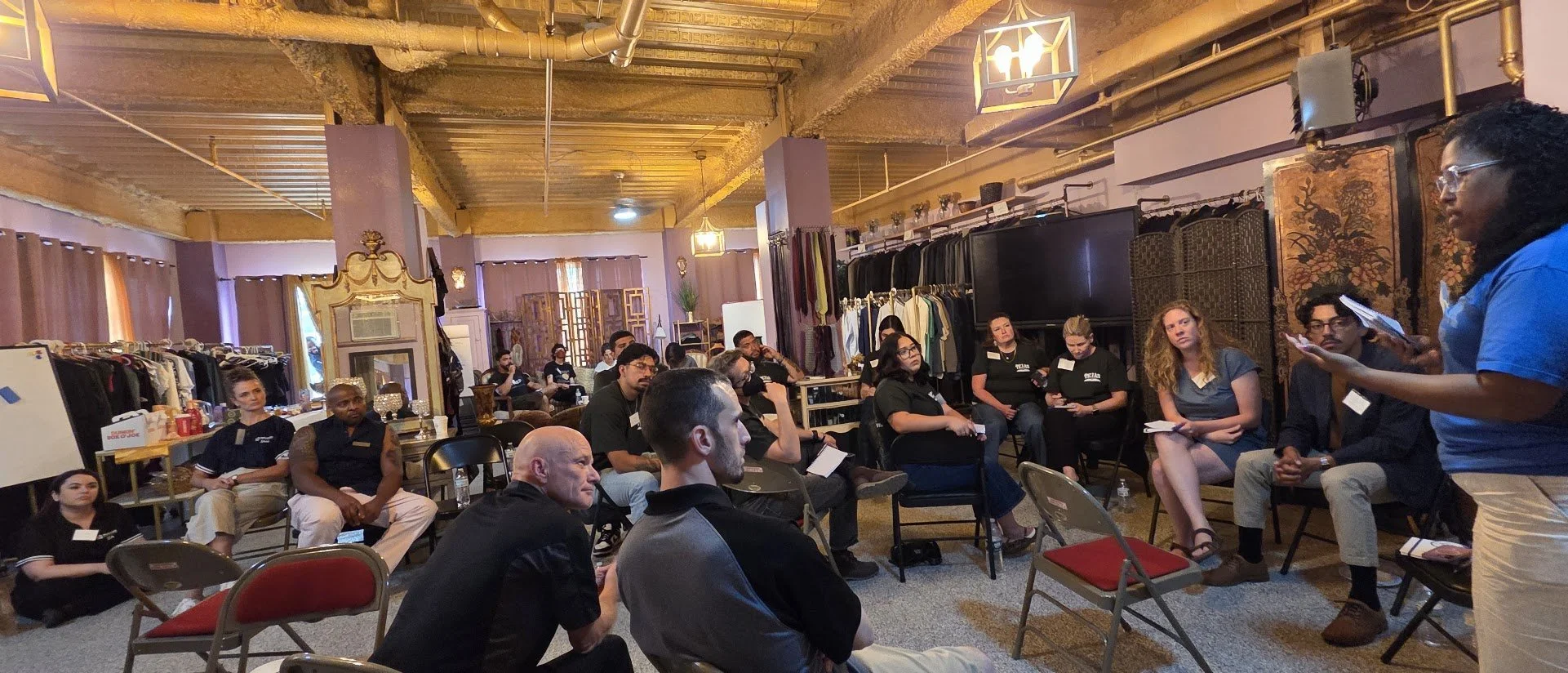
Hudson Link’s Reentry Capacity Building summit brought five programs together in Ossining, New York.
The programs gathered in Ossining were different enough to make the conversation useful. Each works inside its own prison system, college structure, funding environment and political reality. The details change from Connecticut to Maryland to Massachusetts to Texas to Nevada.
A student comes home and suddenly housing, employment, transportation, financial aid, family, supervision, technology and school all arrive at the same time. A person may have successfully navigated college inside for years and then find themselves staring at a login screen on a phone they have barely learned to use.
We talked about peer mentorship, continuity after release, employment, technology, reentry navigation and the relationships required to keep students connected to education when almost everything else in their lives is changing.
People shared what they had built and learned along the way. A solution developed at Goucher might spark an idea in Nevada. Something Yale has already worked through may save another program months of trial and error. Tufts and the Texas team brought their own experience. Hudson Link brought more than twenty-five years of history.
At one point during the summit, the image of oak trees came up: roots spreading outward beneath the ground until separate trees become connected in ways that are invisible from the surface.
Nevada has its own soil. JIVE has to fit our students, our colleges, our correctional system and our communities. Knowledge does not have to stop at a state line. The roots can touch.
YALE · TUFTS · GOUCHER · TEJAS / UTSA · TMCC / JIVE
Why Sam and Lary Were There
Sam is an HVAC student at TMCC. He is also developing an idea for expanding access to notary services inside Nevada prisons and jails.
It is easy to overlook a notary until you cannot get one. Documents connected to housing, family matters, benefits, property, court issues and release planning may depend on a notarized signature. On the outside, that can be a fifteen-minute errand. Inside a correctional institution, access, movement, scheduling and cost can turn it into something much larger.
Sam saw a problem he understands and started working on it. He has talked about eventually expanding the idea into broader legal navigation and advocacy. Right now, he is starting with something concrete.
Being in Ossining put him around people who understand how an idea grows from one practical problem into something sustainable.
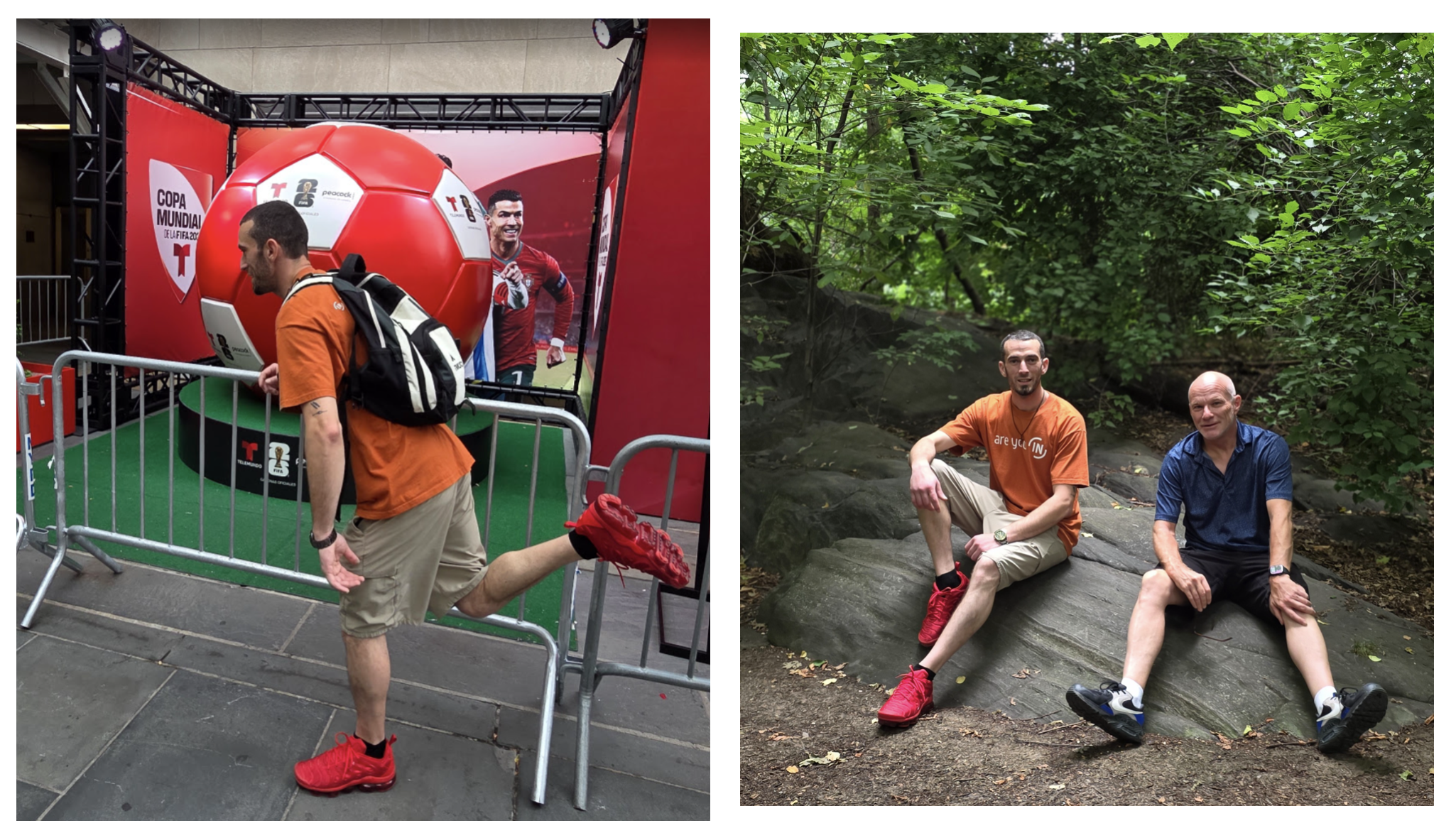
Sam in the city; Sam and Lary in Central Park. New York City, July 2026.
Lary brought a different perspective. He spent thirty-three years incarcerated before coming home on a commutation. During those years and after, education became a major part of his life. He has earned multiple degrees, including a bachelor’s degree, and during the trip he was already talking about school again.
We went back and forth about what he should study next and, more importantly, what he wanted all of that education to become.
For decades, prison-education advocates have fought to get students into college. Those fights mattered. Restored Pell eligibility matters. College classrooms inside correctional facilities matter. Credits and credentials matter. Now there are growing numbers of graduates coming home with education behind them and years of life ahead.
Lary is living in that next chapter. The work continues after the diploma.
Twenty-Five Years in Ossining
Hudson Link has been building higher-education pathways for incarcerated and formerly incarcerated students since 1998, with roots tied closely to the community around Sing Sing Correctional Facility in Ossining.
We did not tour Sing Sing, and our summit was not held inside the prison. Still, its presence and history sit close to Hudson Link’s work.
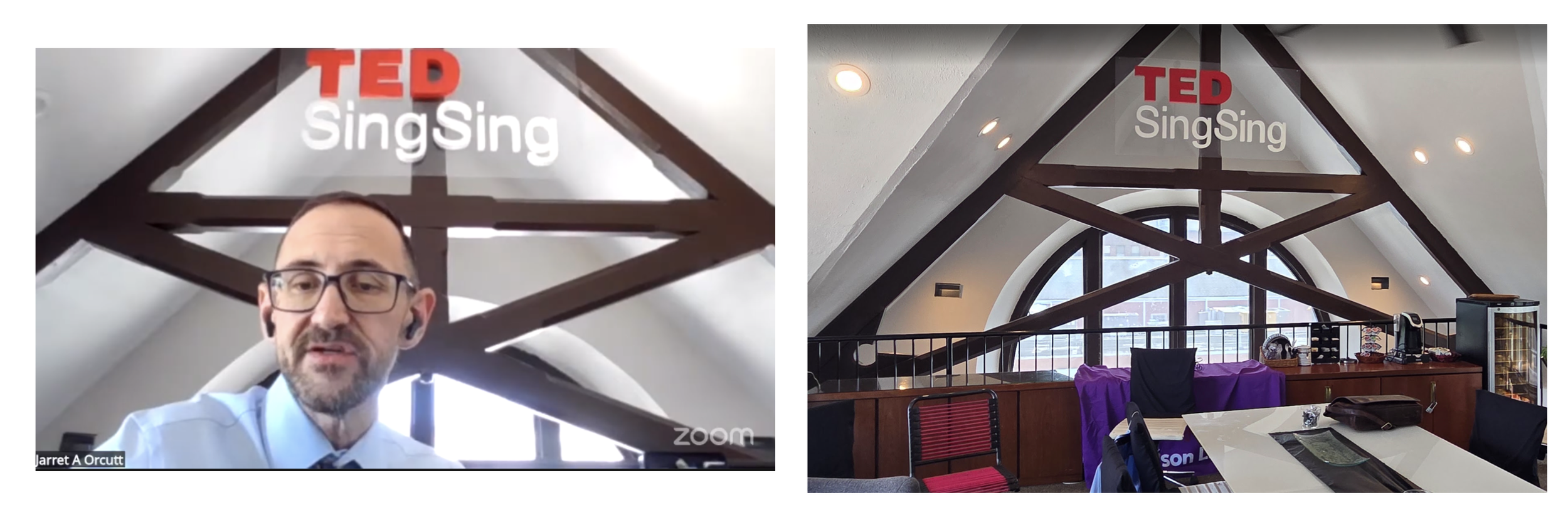
Ossining, Friday morning: joining the Nevada Sentencing Commission remotely from Hudson Link, with Sing Sing part of the landscape around the work.
On Friday morning, I joined a Nevada Sentencing Commission meeting remotely from Hudson Link’s office. Sam and Lary were nearby, and Sing Sing was just down the road.
Later that day, Hudson Link held its Finish Line pinning ceremony, recognizing students who had begun college while incarcerated and continued their education after returning home.
Release changes almost everything at once. A student may gain freedom while losing the structure in which school had been happening. Suddenly there is a job to find, transportation to arrange, appointments to make, family relationships to rebuild and a completely different set of college systems to navigate.
And the assignment is still due.
After the ceremony, Hudson Link alumni, students, staff and friends gathered for a barbecue in Ossining. That afternoon gave twenty-five years a human shape.
There were people there who had begun college inside years earlier, came home and continued forward. Some had built careers. Some had entered this work themselves. Some were simply there to see people they knew.
A program that lasts long enough begins accumulating more than outcomes. It accumulates people. Enough years pass that the first students become the people welcoming the next ones.
One Day in New York
The next morning we took the city. Sam had never been to New York, so naturally we tried to do far too much in one day.
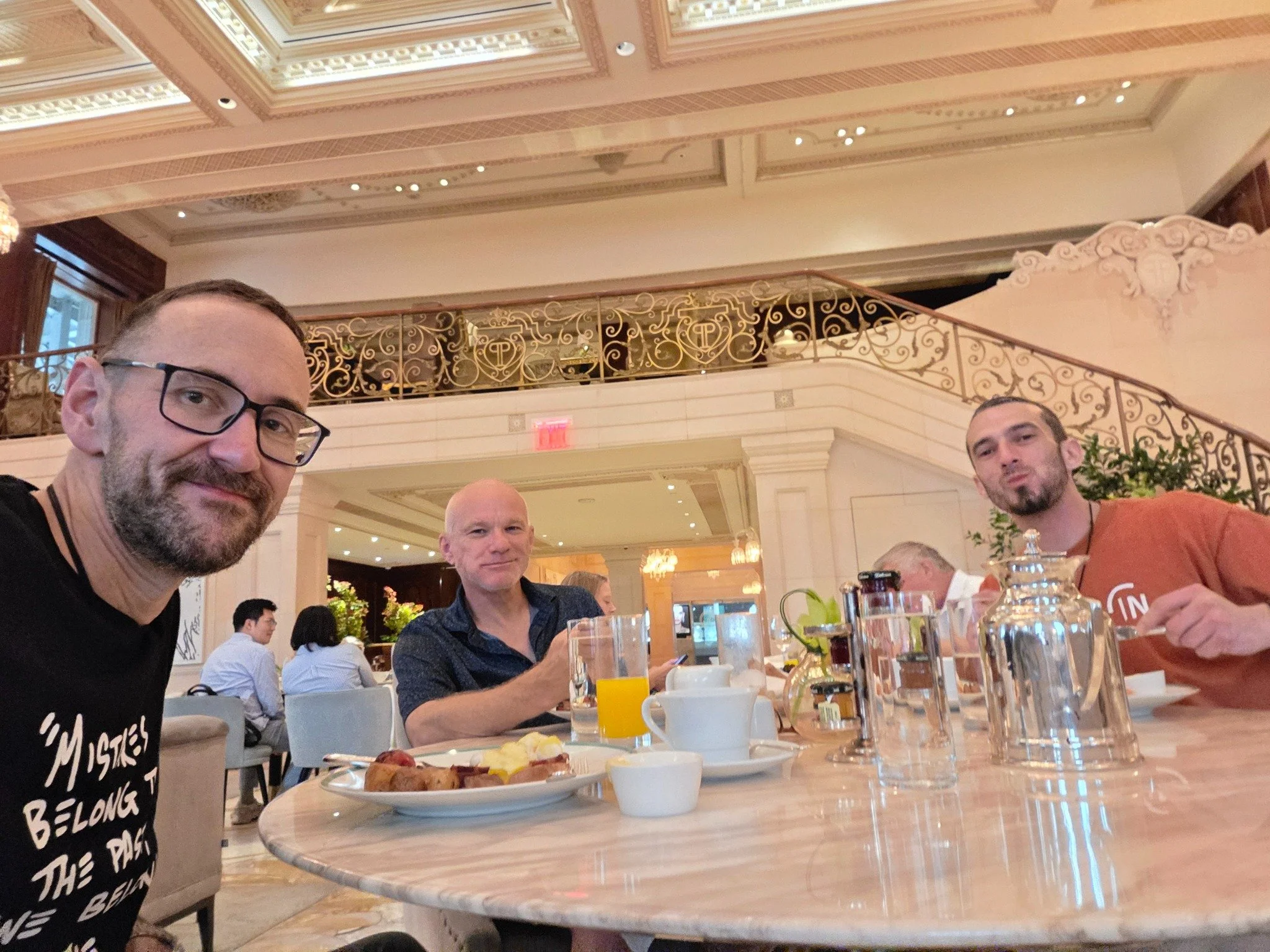
Breakfast in Manhattan. Left to right: Jarret Orcutt, Lary Plumlee and Samuel Gutierrez.
We ate breakfast at a marble table. We walked through Central Park. Sam found a giant World Cup display and posed next to a soccer ball about the size of a small car. We got turned around, took pictures, walked some more and eventually became very aware of Lary’s knees.
Some of my favorite photographs came from that day: three men having breakfast, three guys sitting in Central Park, the three of us between stops.
Our systems have plenty of names for people: incarcerated person, returning citizen, justice-involved student, mentor, participant, graduate. For one day in New York, we did not need them.
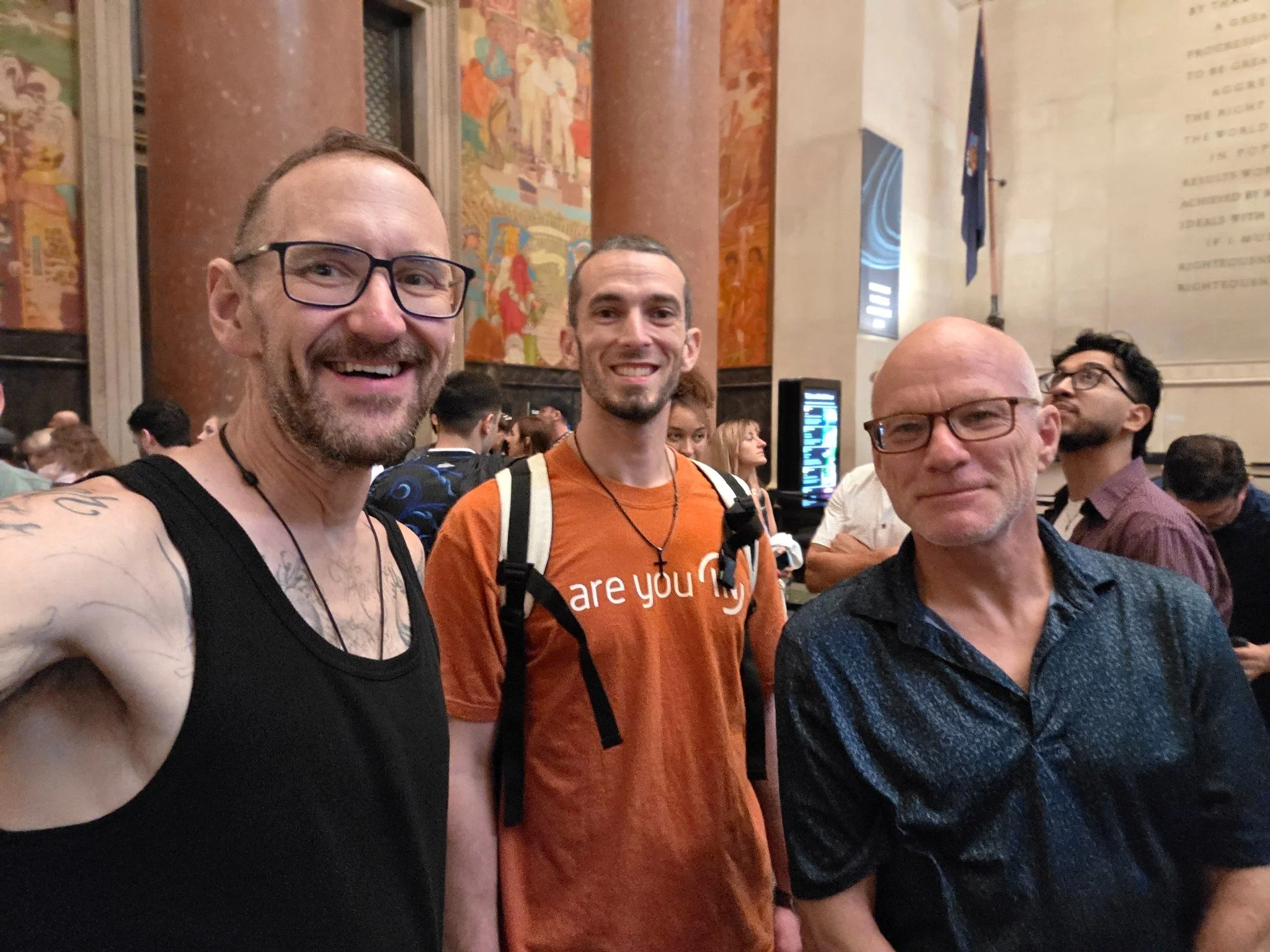
Grand Central Terminal. New York City, July 2026.
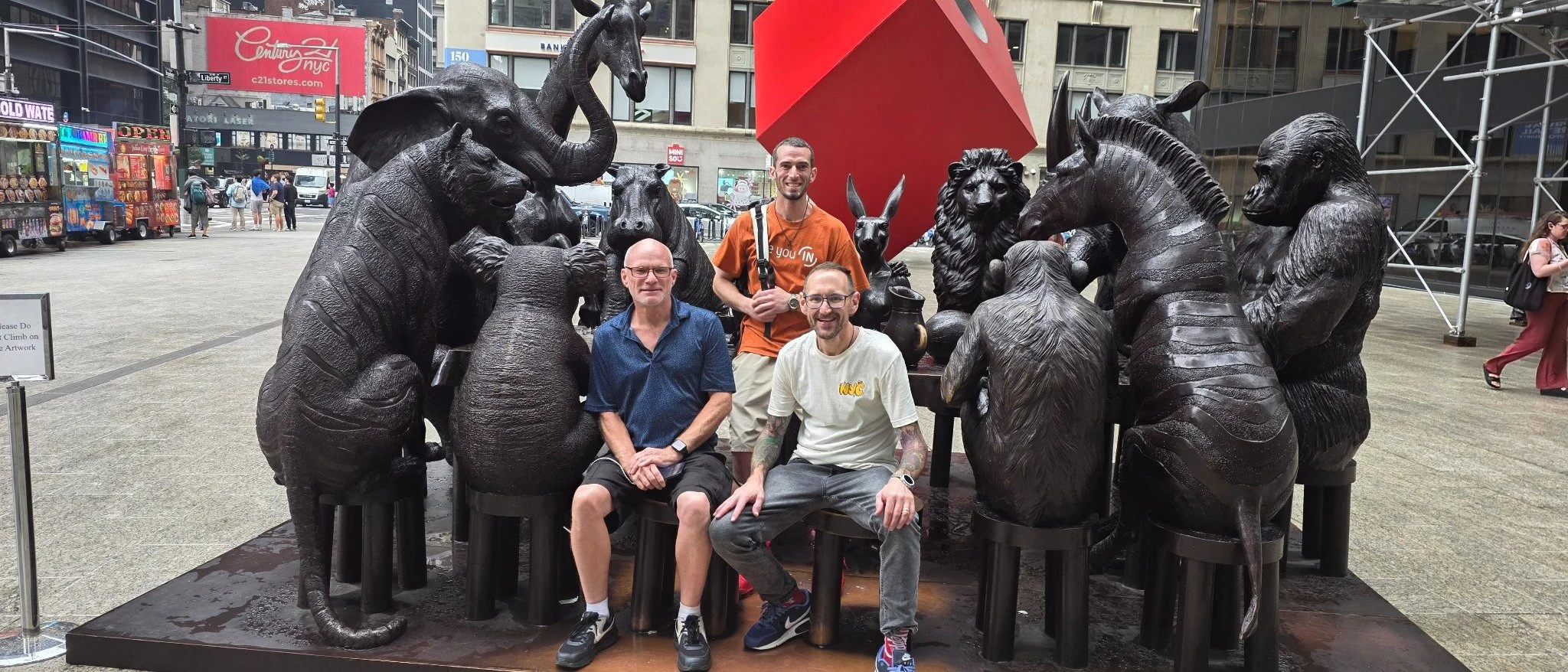
Downtown, late in the day. Jarret Orcutt, Lary Plumlee and Samuel Gutierrez.
Bringing It Back to Nevada
Then we flew home.
Sam went back to HVAC school and kept working on his idea. Lary came home still thinking about what comes next. I went back to TMCC with new relationships across four other programs and a national organization that has been doing this work for more than twenty-five years.
The teams from Yale, Tufts, Goucher and Texas went home to keep building in their own communities. Hudson Link stayed in Ossining. And Nevada kept moving.
JIVE is still young compared with Hudson Link. That gives us room to build something shaped by what we know now and by what our students and mentors teach us along the way.
Twenty-five years from now, I would like somebody from another state to come to Nevada because there is something here they want to understand. I would like Sam to be in that room. Maybe Lary is there too. Maybe the people leading the conversation are students we have not even met yet.
I would like our graduates to be so common at the gathering that nobody introduces them as success stories. They are simply alumni who came back.
Somebody will be starting year one. Somebody else will know what year twenty-five looks like. And somewhere beneath all of it, the roots will already be touching.
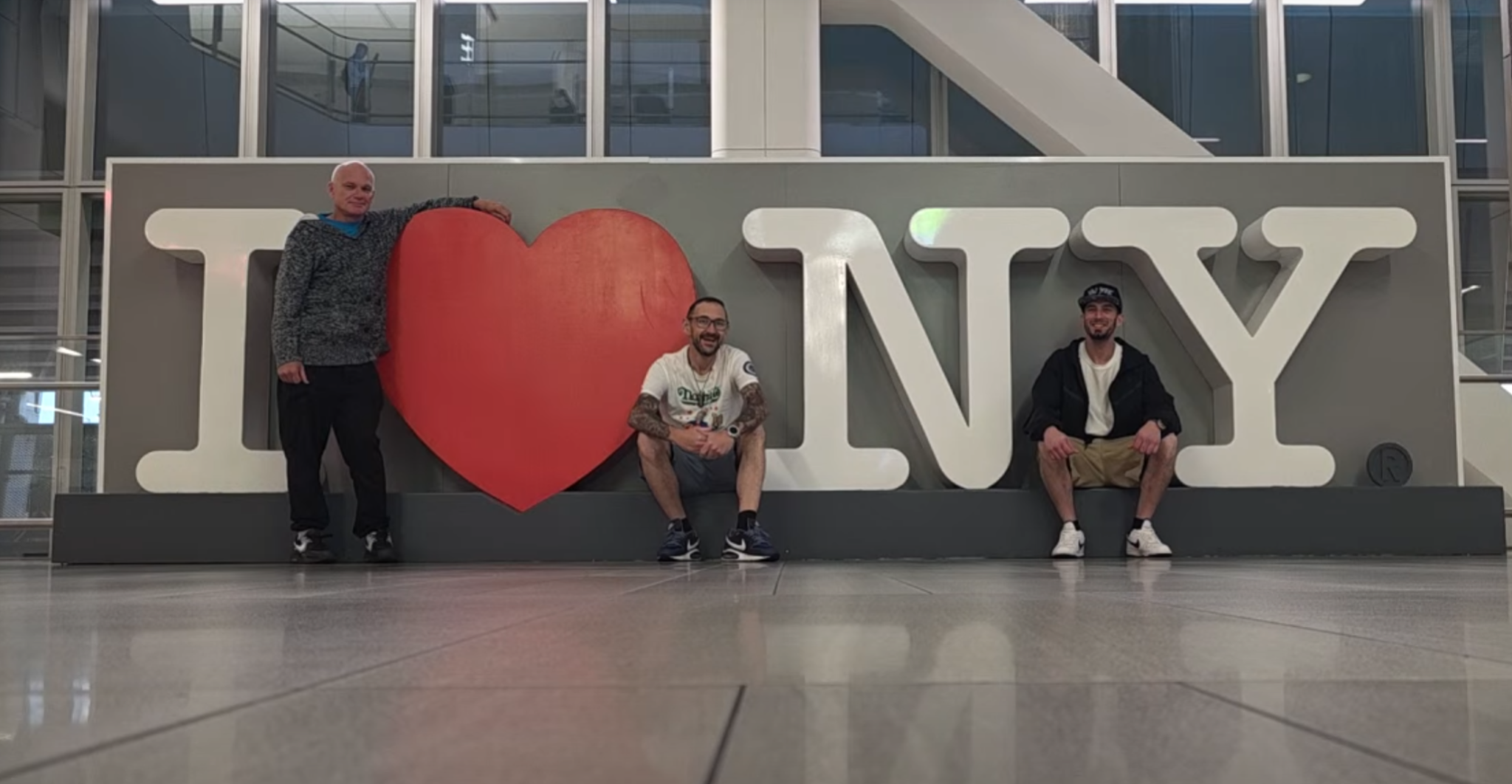
Going home. New York, July 2026.
ABOUT THE AUTHOR
Jarret Orcutt is Coordinator of Educational Partnership Programs at Truckee Meadows Community College in Reno, Nevada, and serves on the Nevada Sentencing Commission.